
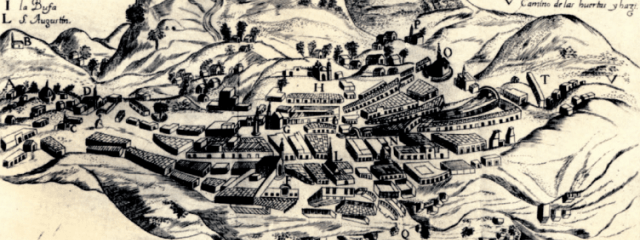

Figure 1: An engraved panorama of the famous silver-mining city of Guanajuato in 1828, after an illustratrion in C. Nebel’s Voyage pittoresque et archeologiue dans la partie la plus Interessante du Mexique (1836).
Silver has been a prized metal for thousands of years, captivating the hearts of people across cultures and civilizations. From ancient civilizations to modern-day mines, the quest for this precious metal has driven human innovation and shaped the course of history.
Ancient Mosaic: The Early Days of Silver Mining
The earliest recorded silver mining dates back to around 3000 BCE in Anatolia (modern-day Turkey). However, it’s believed that humans have been exploiting silver deposits since ancient times. In Egypt, around 2000 BCE, silver was used extensively for making jewelry and other decorative items.
Ancient Greek and Roman Dominance
During the height of the Ancient Greek civilization, around 500 BCE, silver mining flourished in Greece and its colonies. The Greeks prized silver for its beauty, durability, and rarity, using it to mint coins and craft exquisite jewelry pieces. Later, as Rome expanded its empire, they adopted many of the Greek customs, including silver coinage.
Medieval and Renaissance Periods: Revival and Expansion
The Middle Ages saw a resurgence in silver mining, particularly in Europe, where the increasing demand for currency led to an expansion of mining activities. As trade flourished during the Renaissance period, so did the need for precious metals like silver. New discoveries were made, and mines opened up across Spain, Mexico, and South America.
Potosí: The Silver Rush
The Andean mine at Potosí (modern-day Bolivia) was once the world’s greatest silver producer, producing an estimated 42 million kilograms of the metal between the 16th and 18th centuries. This mining boom contributed significantly to Spain’s wealth during the colonial era, making it a major player in the global economy.
California Gold Rush and Silver Fever
In the mid-19th century, as news spread about the discovery of gold in California, thousands flocked to the American West, sparking the Gold Rush fever. However, many also sought to strike silver-rich veins, leading to an explosion of mining activity across Nevada’s Comstock Lode and other regions.
Modern Era: Diversification and Environmental Considerations
As the world became more globalized, so did the need for diverse energy sources and resources. Silver mining evolved alongside these changes, incorporating new technologies and emphasizing environmental stewardship. The introduction of advanced ore processing, improved extraction methods, and reduced-impact mining practices have transformed the industry.
A Legacy That Shines On
Today, silver mining remains an essential part of global commerce, powering innovations in electronics, medicine, and more. From its ancient roots to modern-day operations, silver’s allure has captivated people across cultures and ages. As we continue to push the boundaries of technology and sustainability, one thing is certain: the legacy of silver mining will shine on.
 The Mineralogical Record
Leave a comment